Porsche 718 – RS61 Spyder
Completed in 2023
Few cars embody the spirit of early 1960s motorsport as impressively as the Porsche 718 RS61 Spyder. Developed for international competition, defined by uncompromising lightweight engineering, and designed with maximum performance in mind, this open racing car remains one of the most significant Porsche sports cars of its era.
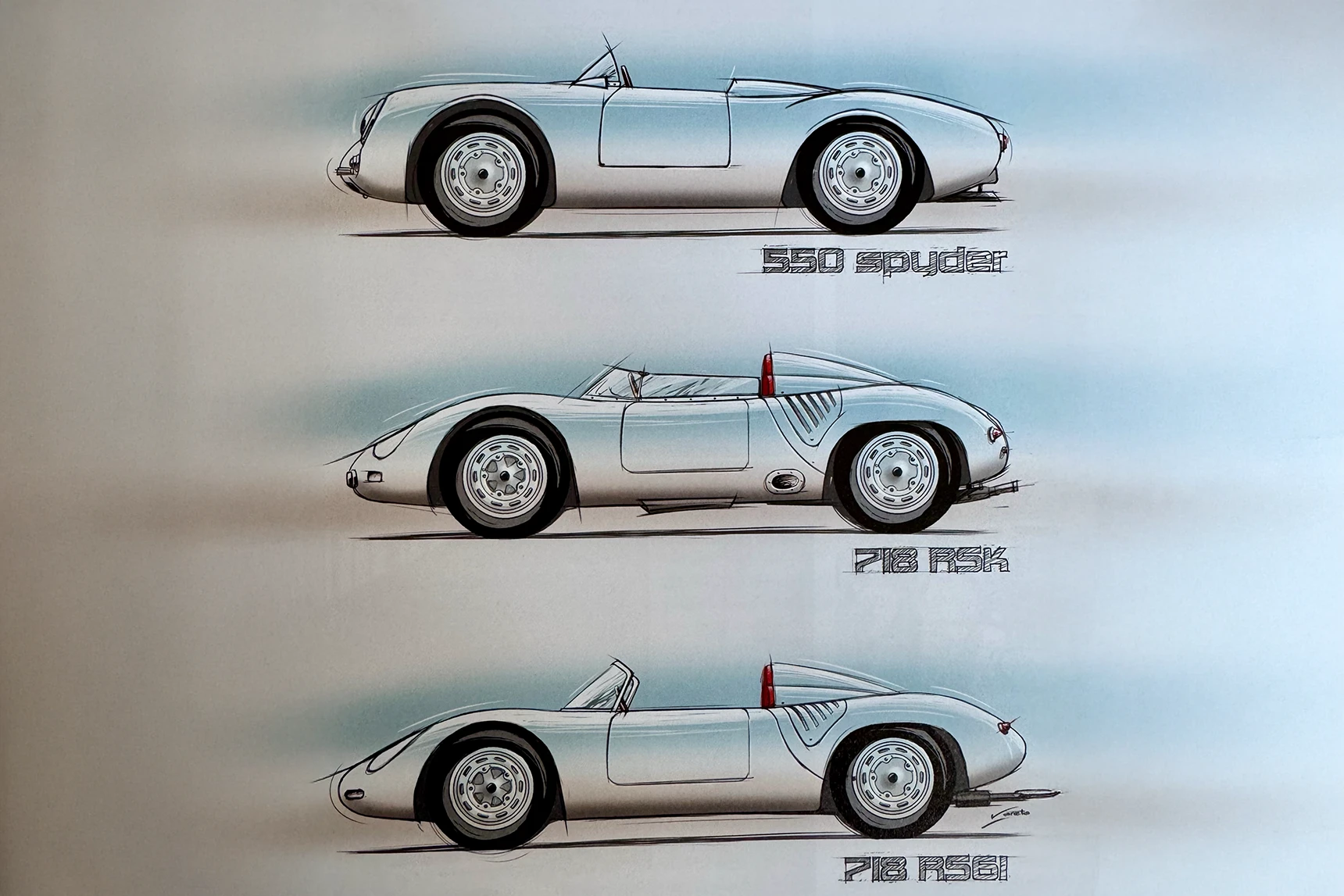
The RS61 represented the final evolution of Porsche’s legendary four-cylinder Spyder series, which began in 1953 with the first 15 prototypes of the Porsche 550 Spyder. It was also the last aluminium-bodied Porsche sports car before the introduction of the Porsche 904.
The RS61 Spyder we restored has a particularly fascinating history.
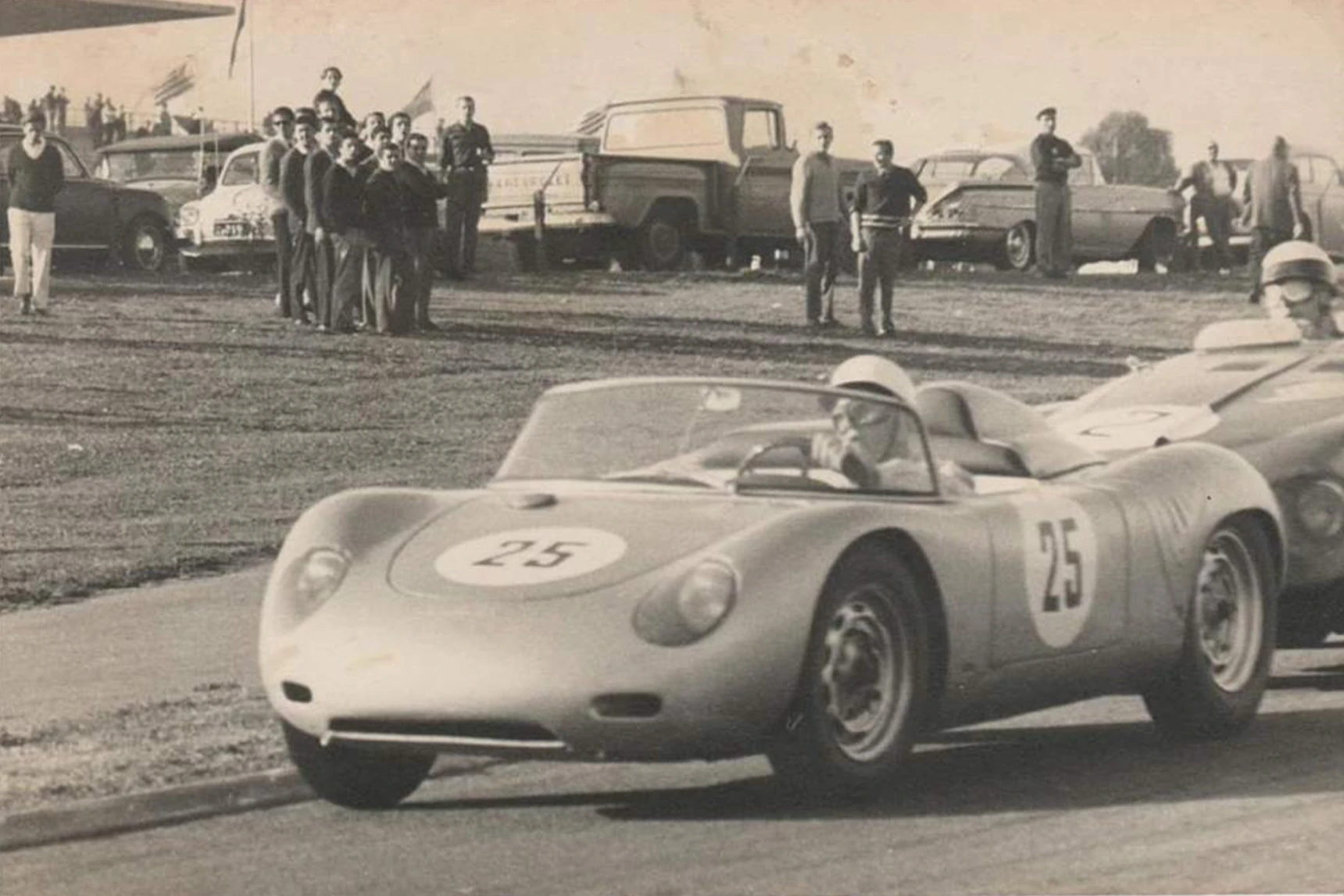
Originally delivered to South America through Julio Lestido, Porsche’s importer for Uruguay and Argentina, the car was successfully campaigned by racing driver Víctor Borrat Quartino. Quartino is still regarded as a motorsport legend in Uruguay today—the Autódromo Víctor Borrat Fabini, located near the capital city of Montevideo, bears his name.
Current Condition & Restoration Goals
When the Spyder arrived at our workshop, it was in remarkably good overall condition. Rather than suffering from corrosion, major accident damage, or missing components, the car retained an exceptionally high degree of original material. At the same time, our initial assessment revealed that a previous restoration had not respected the vehicle’s original character.
Our inspection identified the following issues:
- Excessively thick paint layers
- High-gloss surface finishes
- Over-polished components
- Minor damage to the underbody
- An incorrectly repaired front-end impact
Overall, the car conveyed the appearance of a modern interpretation of a racing car—more reminiscent of a replica or kit car than an authentic period competition vehicle. This style of over-restoration was widely regarded as the benchmark during the late 1990s and early 2000s.
As a result, the authentic atmosphere and historical character of the racing car had largely been lost. By comparing the vehicle with original period reference material, we also identified minor deformations in the underbody and evidence of an earlier repair to the front section, where the original body contours had not been accurately restored.
This initial condition did not do justice to the historical significance of the vehicle. The RS61 Spyder was not in need of a full restoration, but rather in parts incorrectly restored and finished according to “modern standards” — from a historical perspective, an over-restored vehicle.
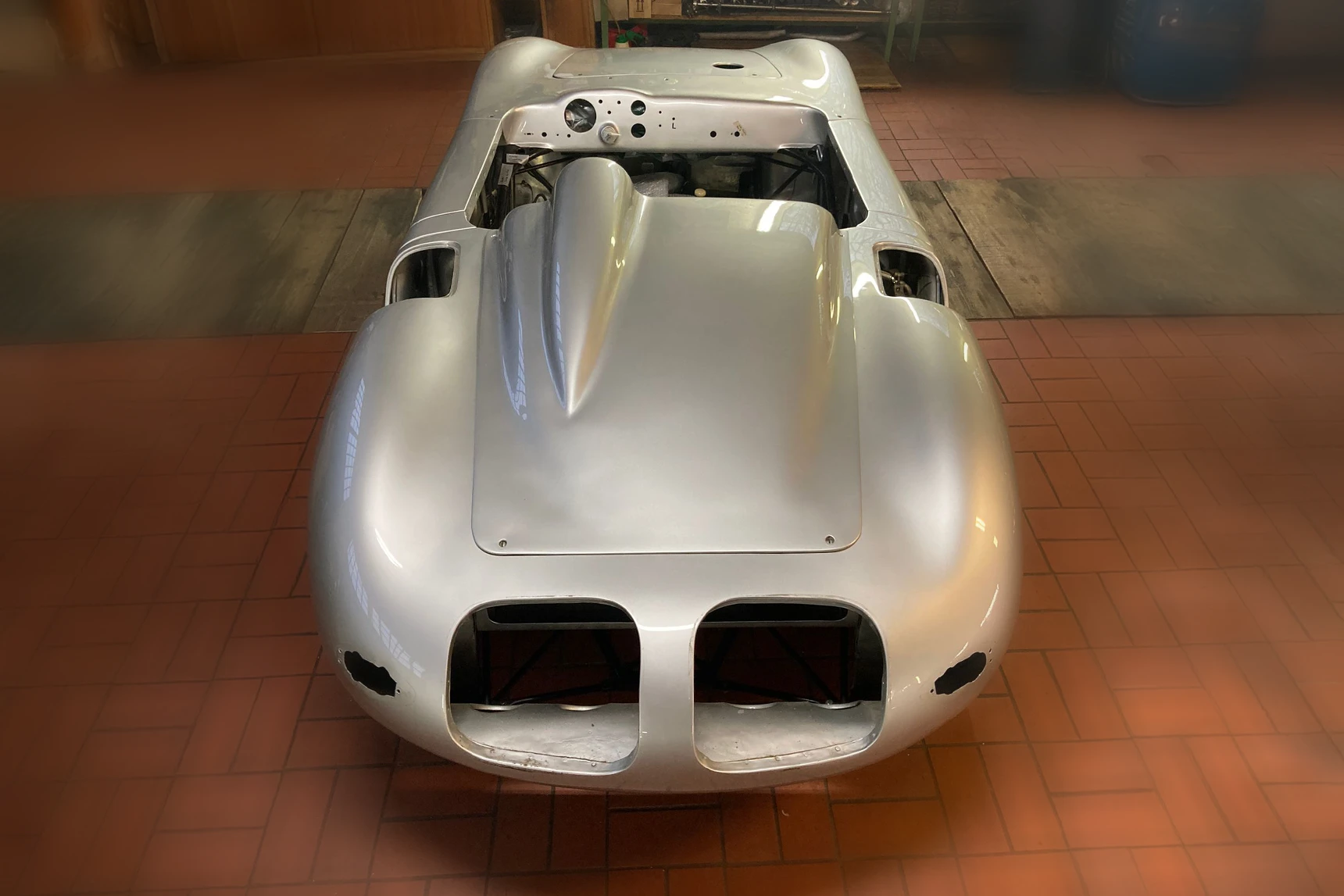
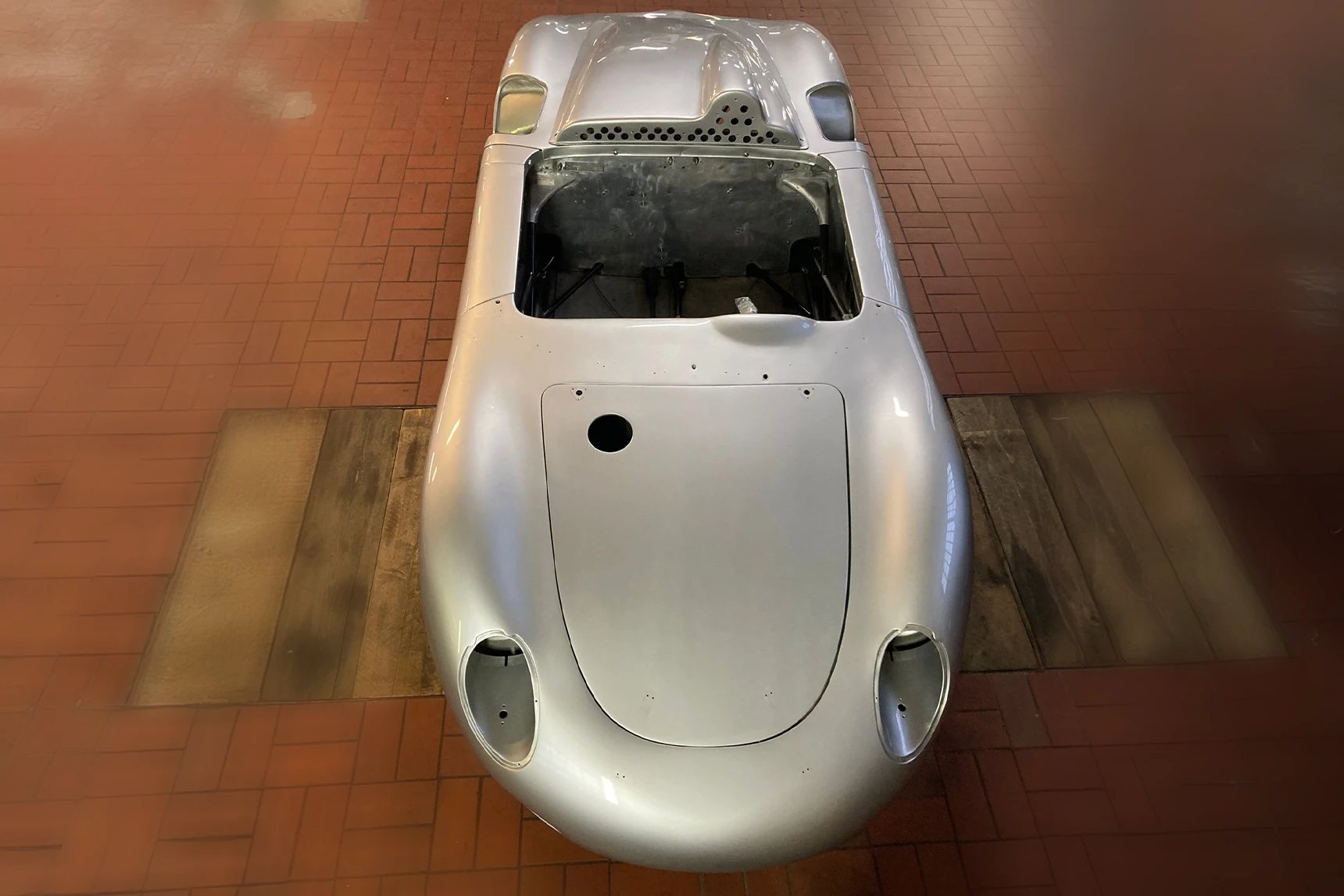
The objective, aimed at enhancing both the vehicle’s presence and its value, was to make the existing original material visible again, to carefully correct previous interventions, and to realign the car with its original character as a 1960s racing machine based on historical references.
Preserving Original Material
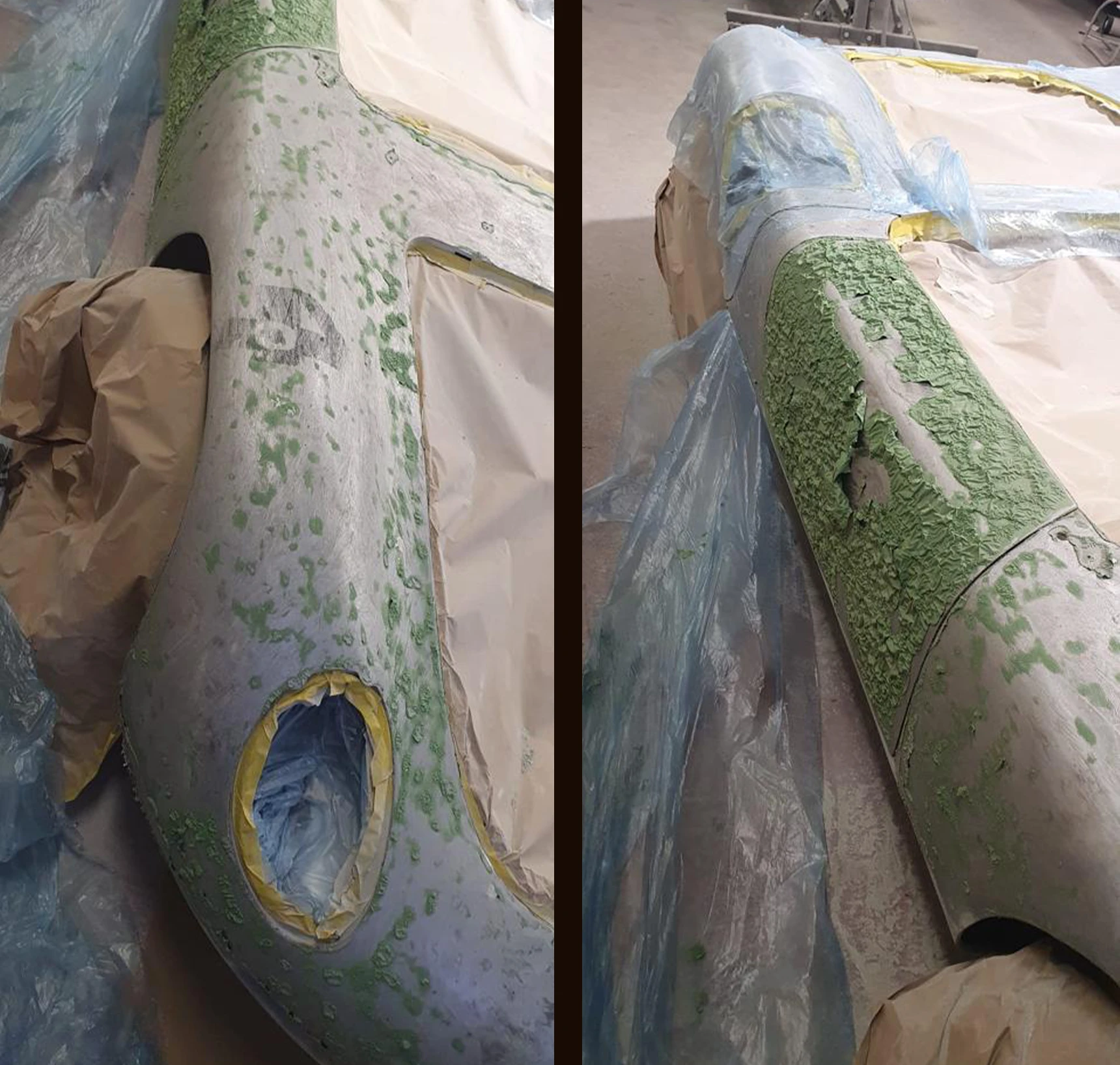
Manual Paint Stripping
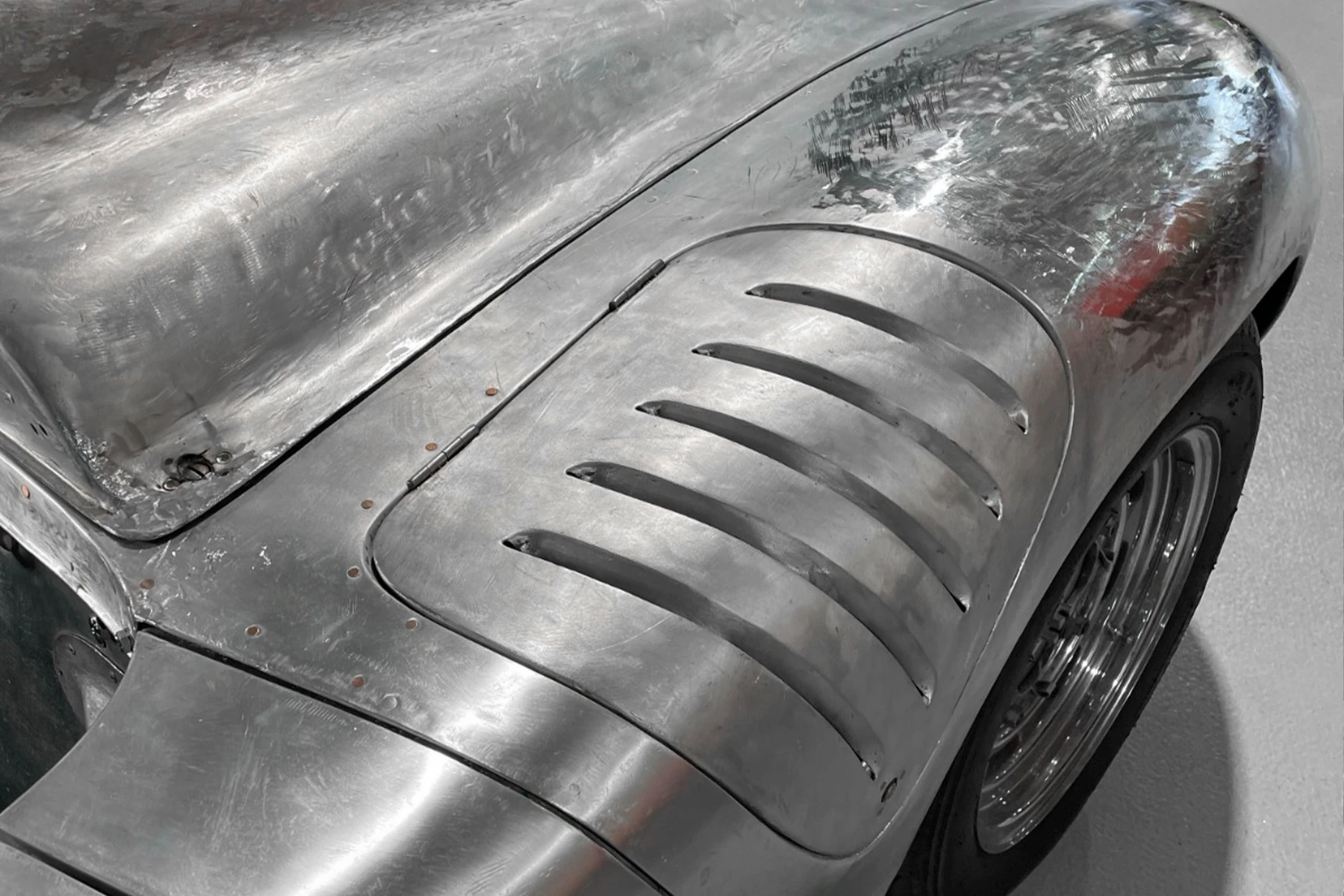
From the very first inspection, the Porsche 718 RS61 Spyder revealed itself to be in an exceptionally original condition for a historic racing car. In addition to the still factory-painted chassis, numerous inner areas of the bodywork also retained their original paint.
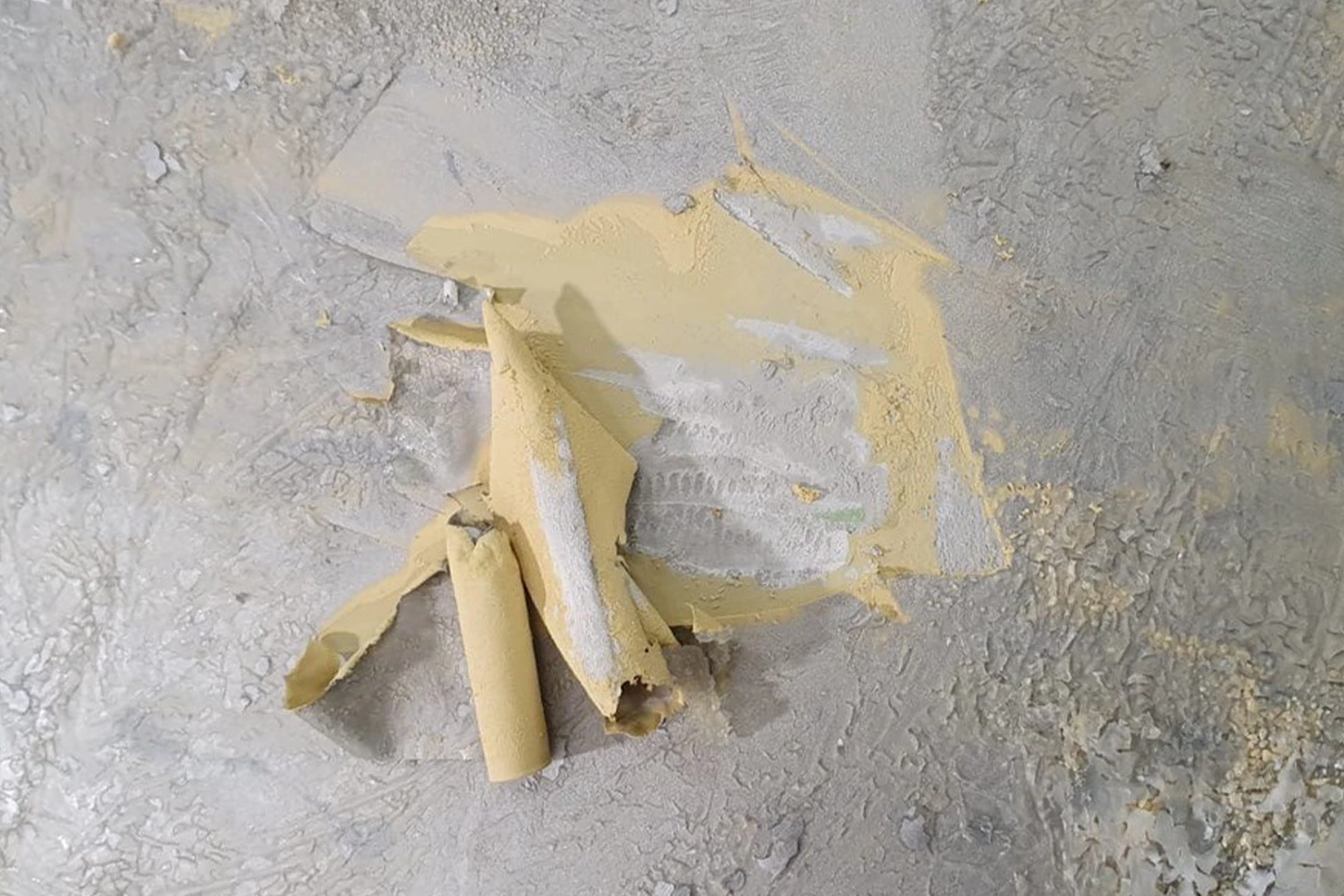
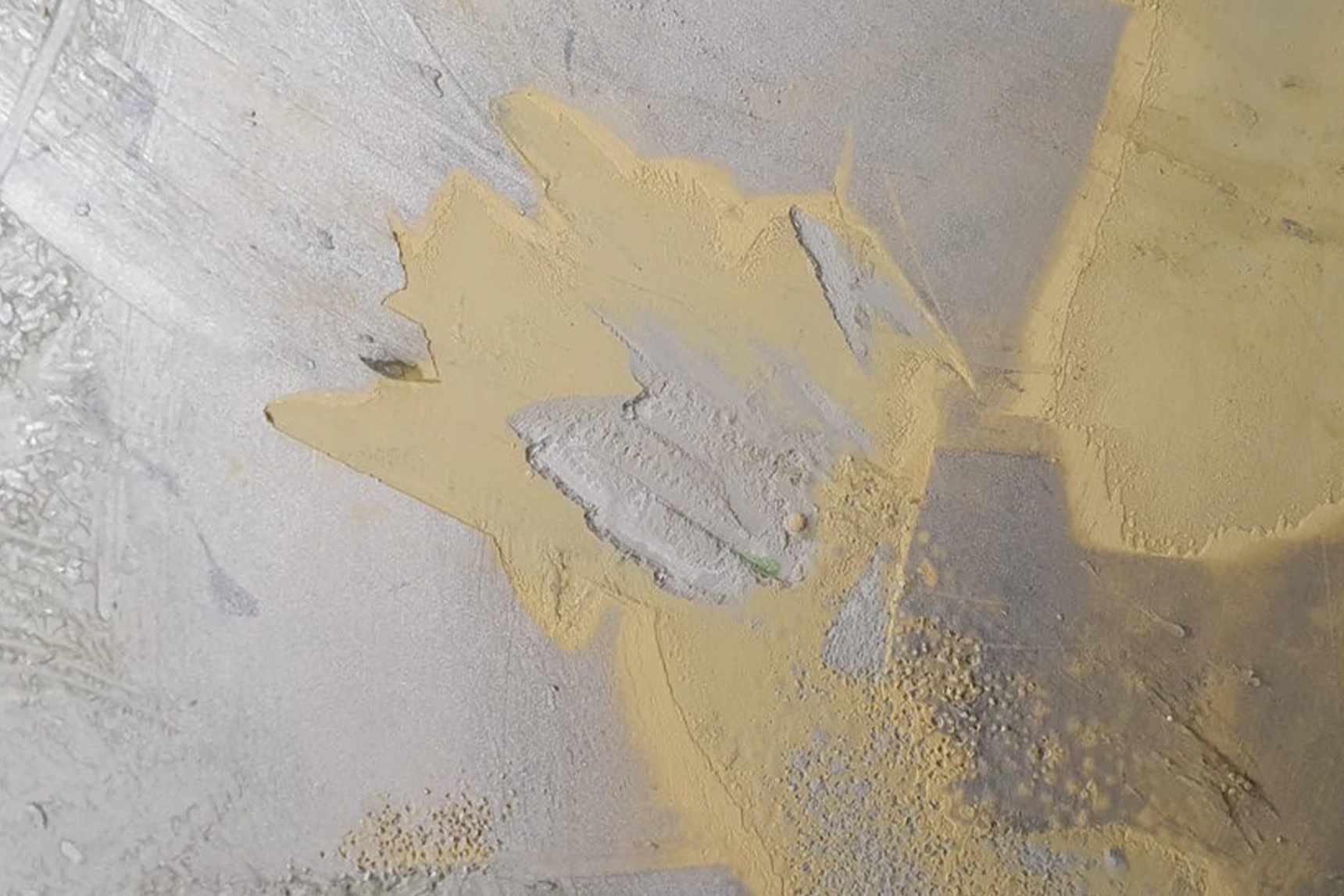
To preserve this authenticity, a deliberate decision was made not to separate the aluminium body from the chassis. Paint removal was carried out manually through a gradual stripping process of the existing paint layers.
This method is significantly more time-consuming than water blasting or chemical stripping, but it allows for far more controlled and material-preserving work. For the originality—and therefore the value—of the vehicle, this approach was of crucial importance. Original areas such as the chassis and existing wiring could only be preserved because a complete disassembly was avoided.
During the step-by-step manual paint removal, factory-applied primers and historic surface finishes were uncovered, confirming the exceptional level of preservation. In this case, the chosen restoration strategy proved to be entirely justified.
Bodywork with a Delicate Touch
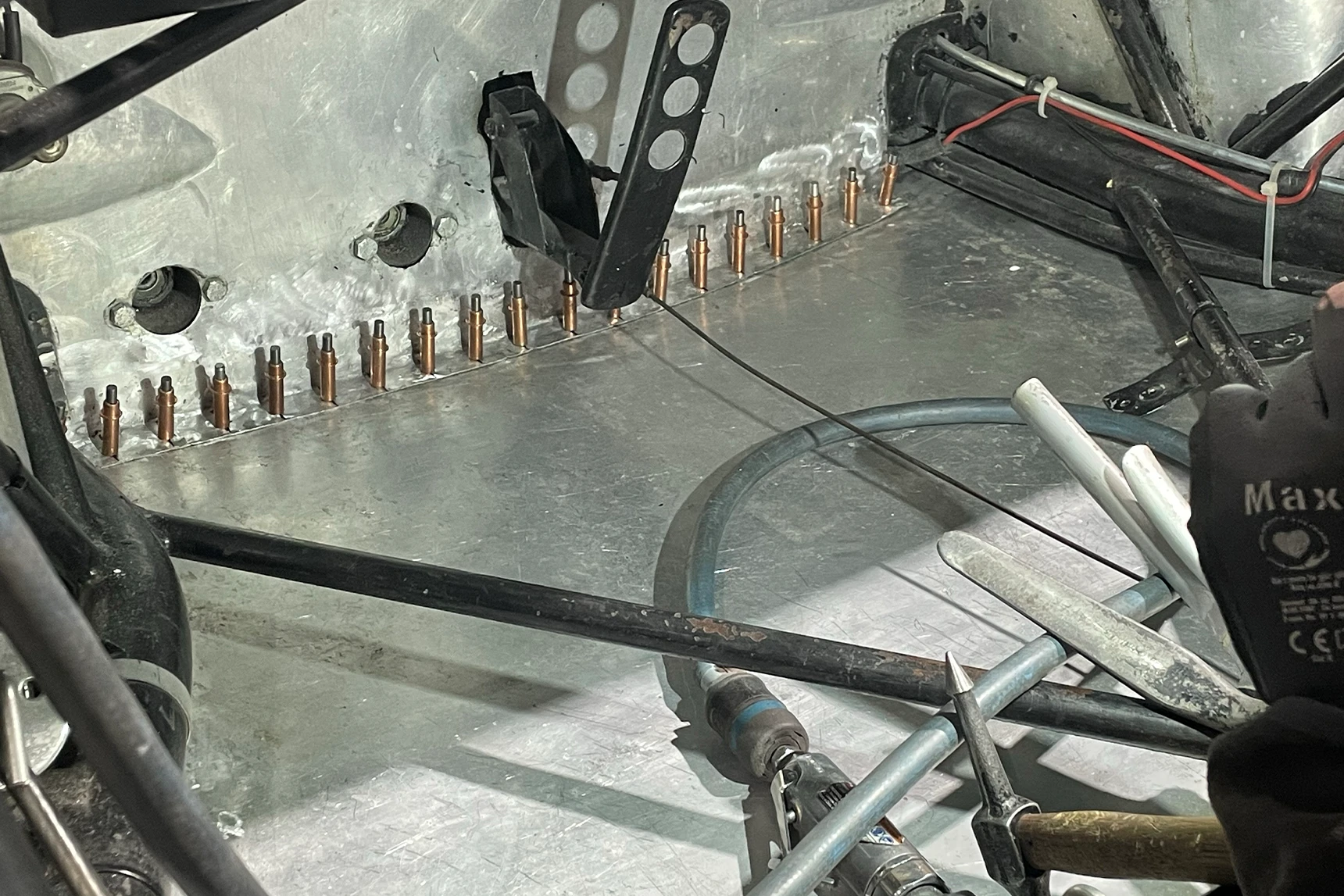
The existing damage was limited to small areas on the underbody and the front section of the vehicle. In order to restore the RS61 Spyder’s original body contours, targeted autogenous weld points were applied, allowing the original shape to be re-established through controlled upsetting and subsequent finishing.
Thanks to the highly skilled manual workmanship on the aluminium bodywork, it was possible to completely avoid any application of new or additional material.
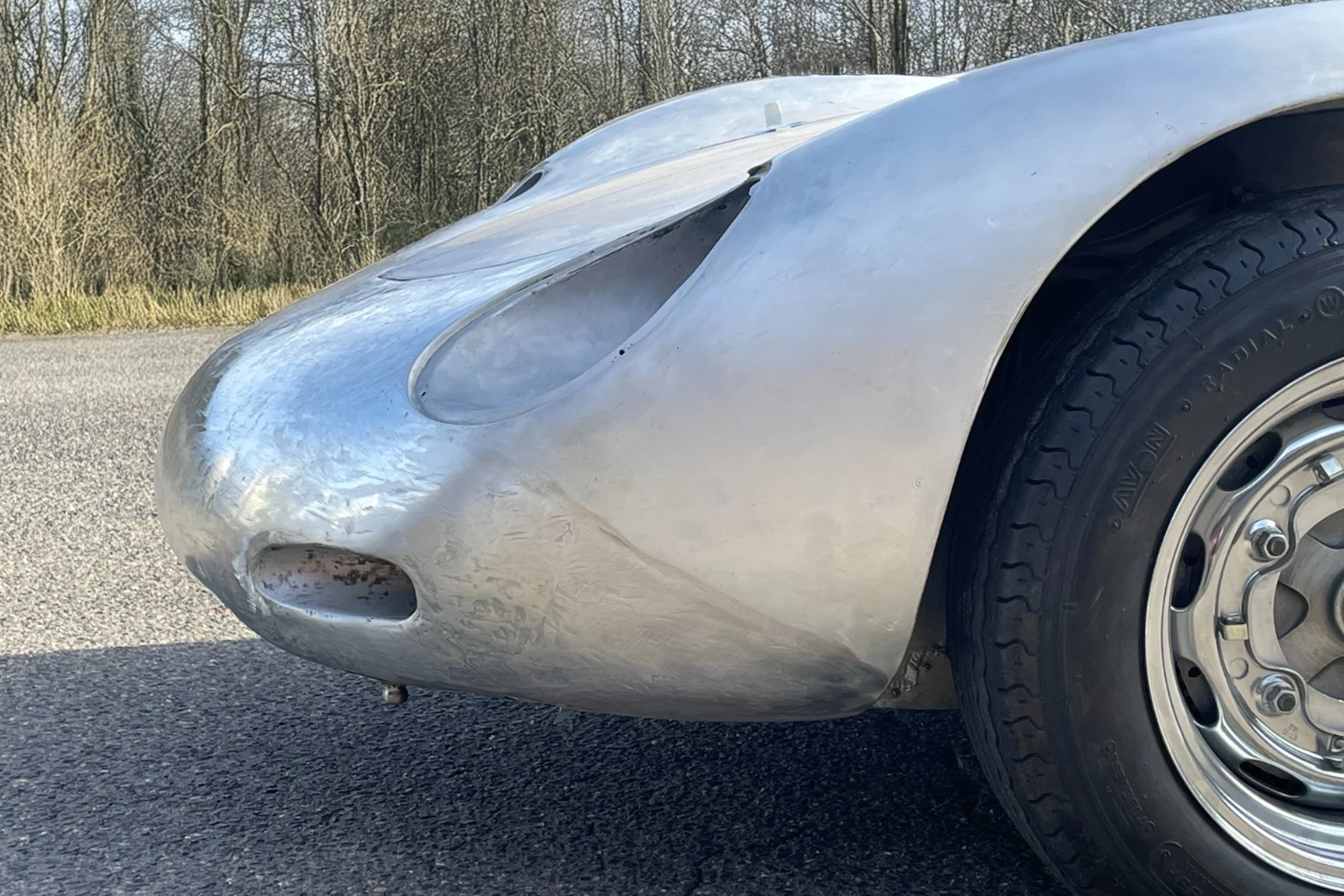
Preserving existing material in a historically correct manner always takes precedence over renewal. This principle is what distinguishes a restoration from a repair.
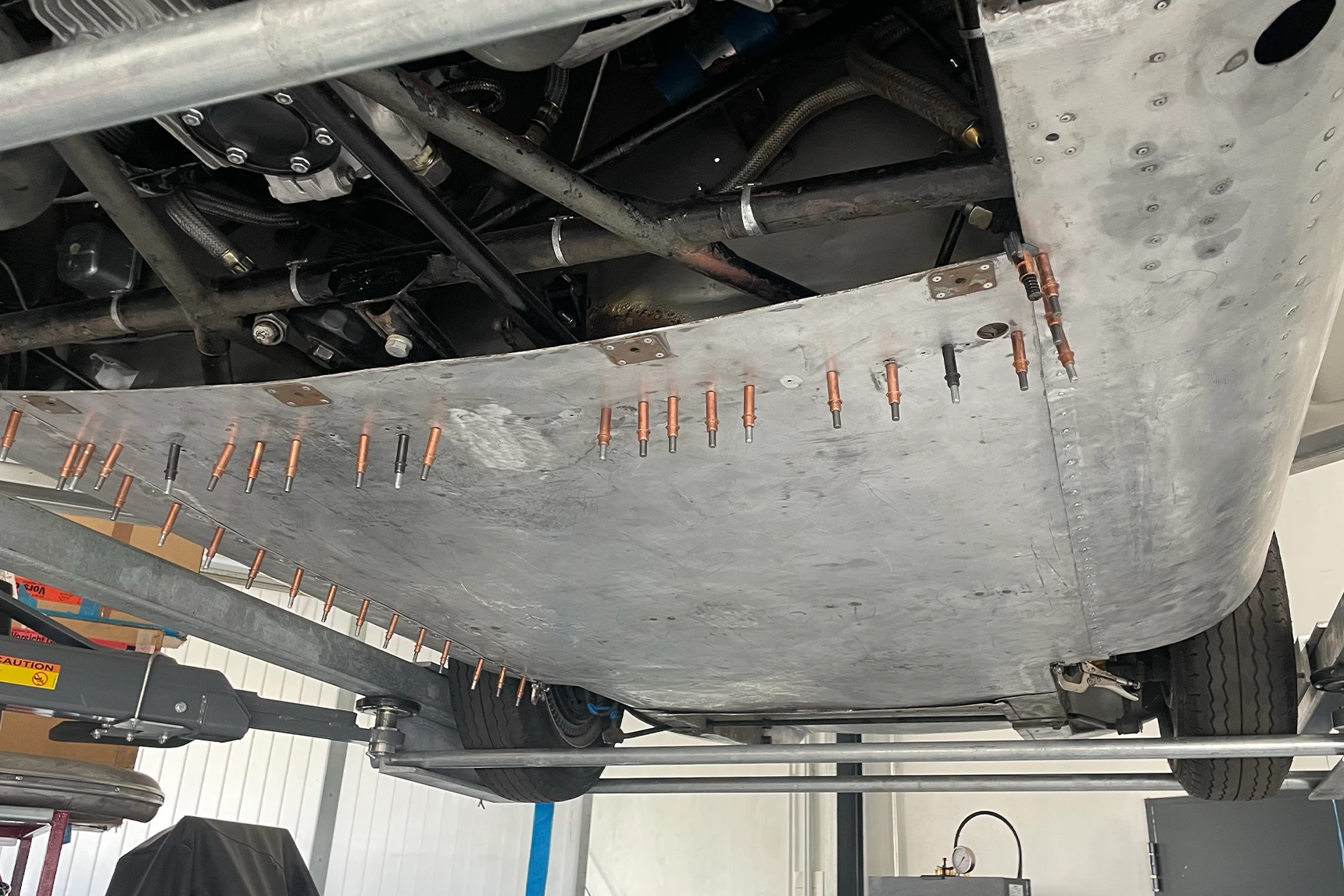
The repair of the damage to the underbody was also carried out in the spirit of an authentic restoration. Rather than replacing components, the original riveted structure of the underbody was carefully drilled out. The sheet metal was then re-formed, adjusted, secured in place, and re-riveted using traditional hand riveting techniques.
Paintwork – Preserving the Racing Character
Thin-layer paint system instead of modern high-gloss finishes
Historic racing cars of this era were not built with the expectation of perfect surfaces or mirror-like gloss finishes. What mattered was functionality—lightweight construction combined with maximum efficiency in pursuit of speed on the race track.
We have embraced this principle in the restoration of this Porsche 718 RS61 Spyder.
Thanks to historic racing photographs from Uruguay, the vehicle could be returned to its period-correct visual appearance. The inner sections of the bodywork were preserved in their original condition, while the exterior skin was refinished. After priming, the paint system was applied using a thin synthetic resin-based coating consistent with the original appearance of the period. This approach allowed characteristic details, such as the rivet lines of the aluminium body, to remain visible. The use of modern filler layers was deliberately avoided.
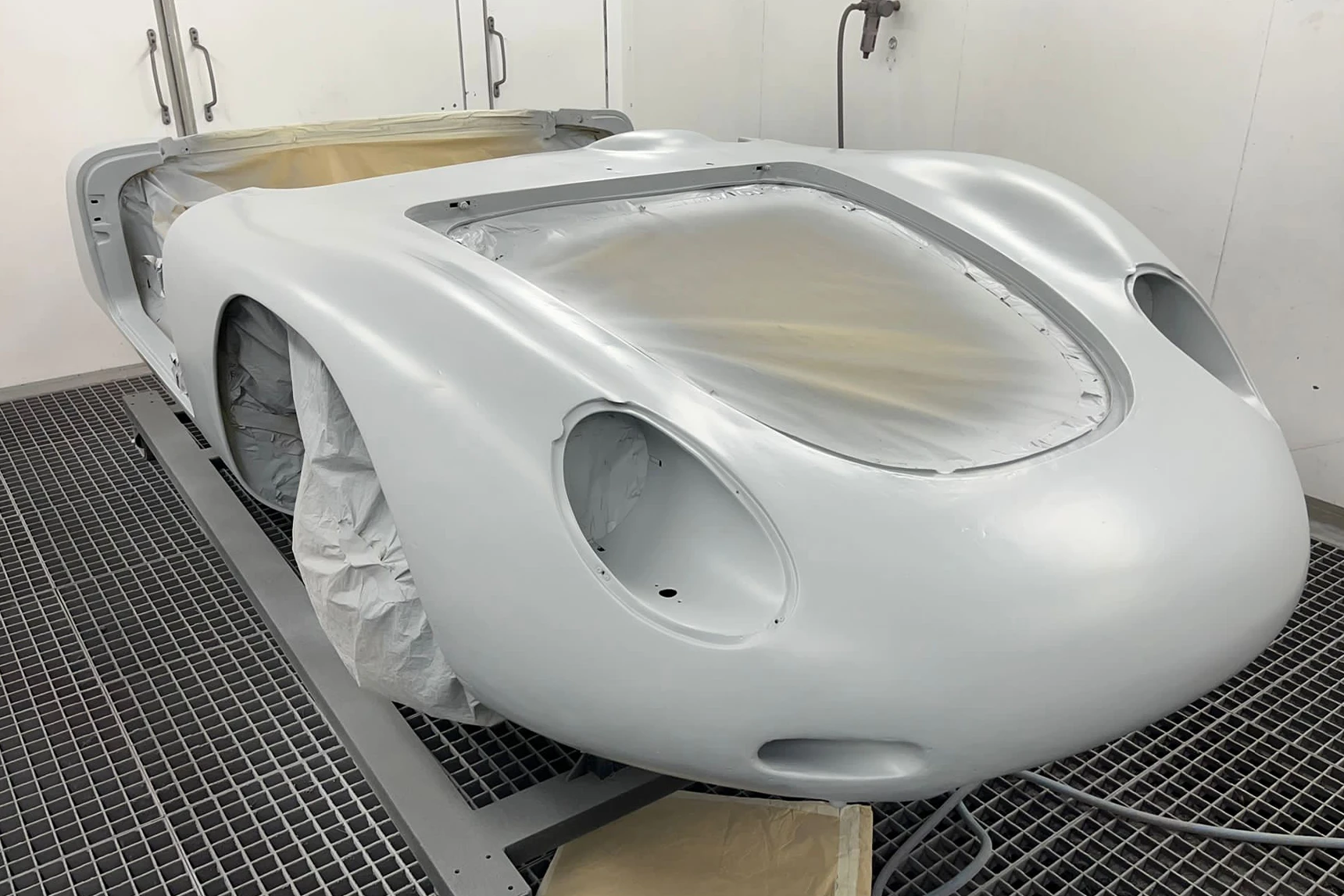
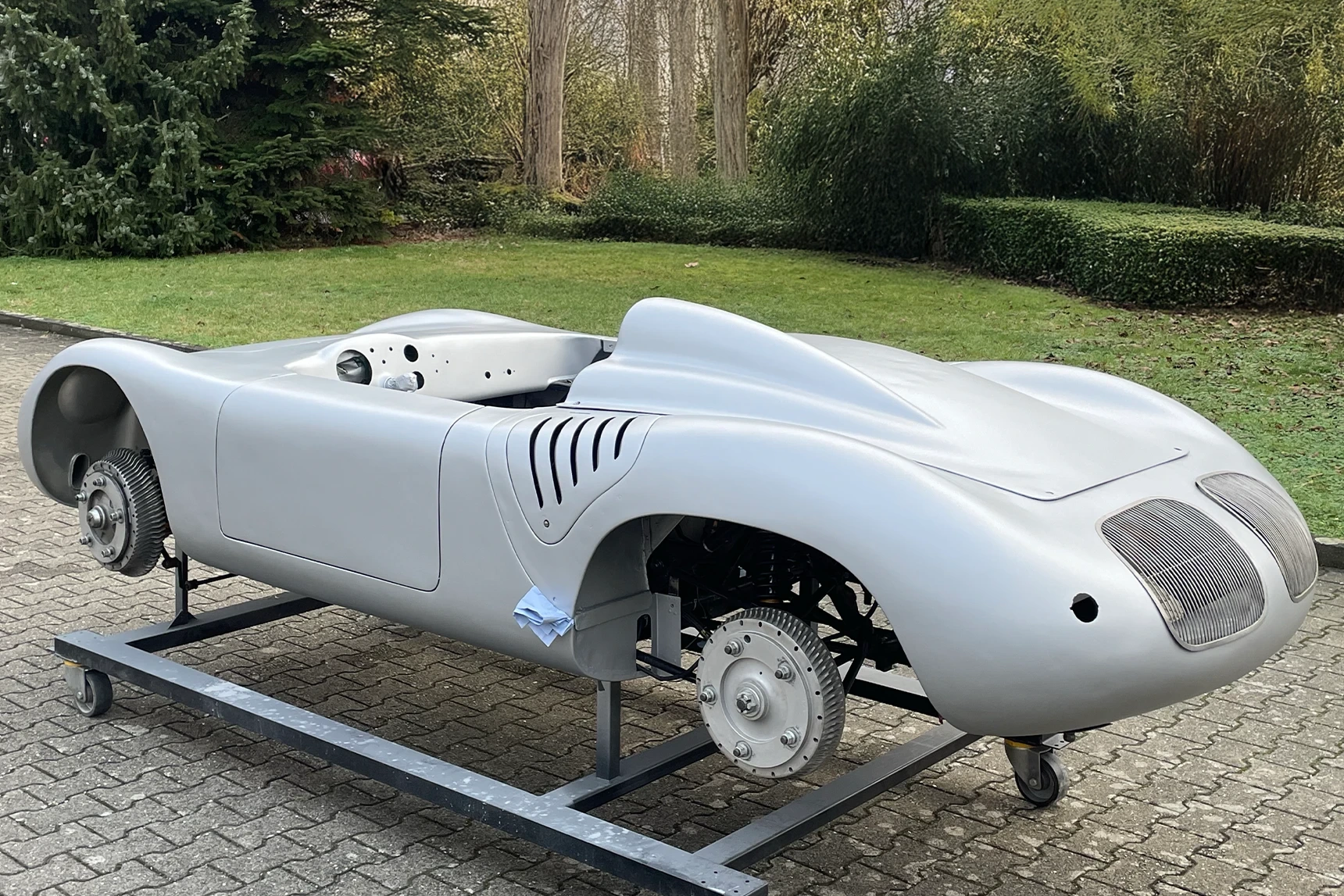
The result is not a modern interpretation of a racing car, but a surface that once again makes the RS61 Spyder’s technical character, lightweight construction, and authenticity tangible and visible.
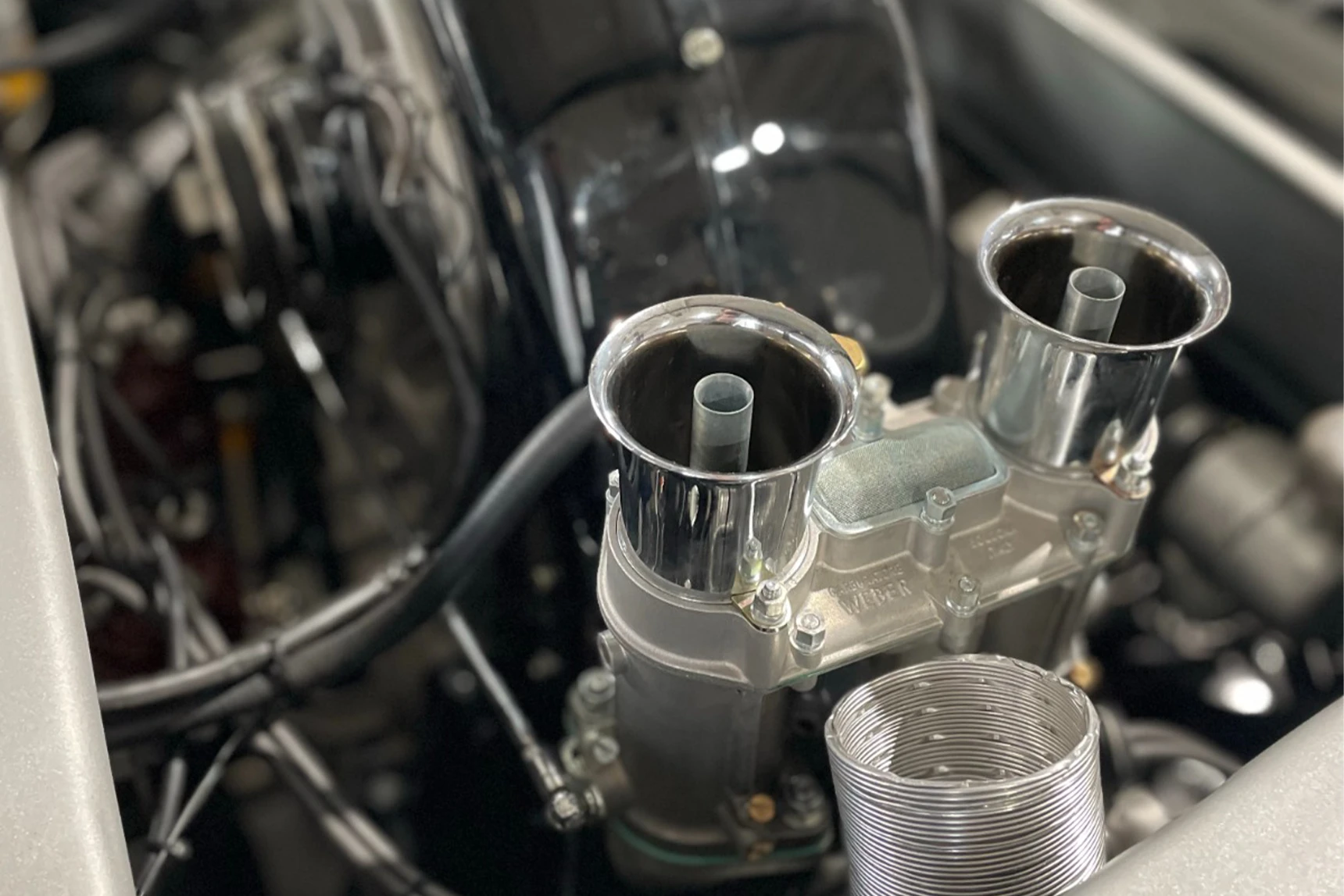
An Exceptional “Survivor”
The Porsche 718 RS61 Spyder restored here is one of the extremely rare “survivor” vehicles from this significant early era of motorsport. Racing cars were built for their intended purpose in competition, which was highly demanding on materials. Accidents and damage were not uncommon.To find such an exceptionally high degree of original material preserved over decades is therefore extremely rare. Its preservation is of great historical importance and significant value relevance. The chassis still retains its original factory paint finish. Numerous interior areas still show original primers, and many components originate from the car’s active competition period—for example, its time at the Autódromo Víctor Borrat Fabini in Montevideo, Uruguay.
With a maximum preservation of original material, achieving an authentic overall impression of a vehicle is both the goal and the greatest challenge of a restoration. Replaced components or newly applied surfaces must not appear as foreign elements; instead, they must integrate harmoniously into the vehicle’s period-correct overall character. Rather than becoming a perfected showroom classic, the RS61 Spyder has been returned to its identity as a historic racing car—one with credible presence, technical honesty, and a visibly preserved history.
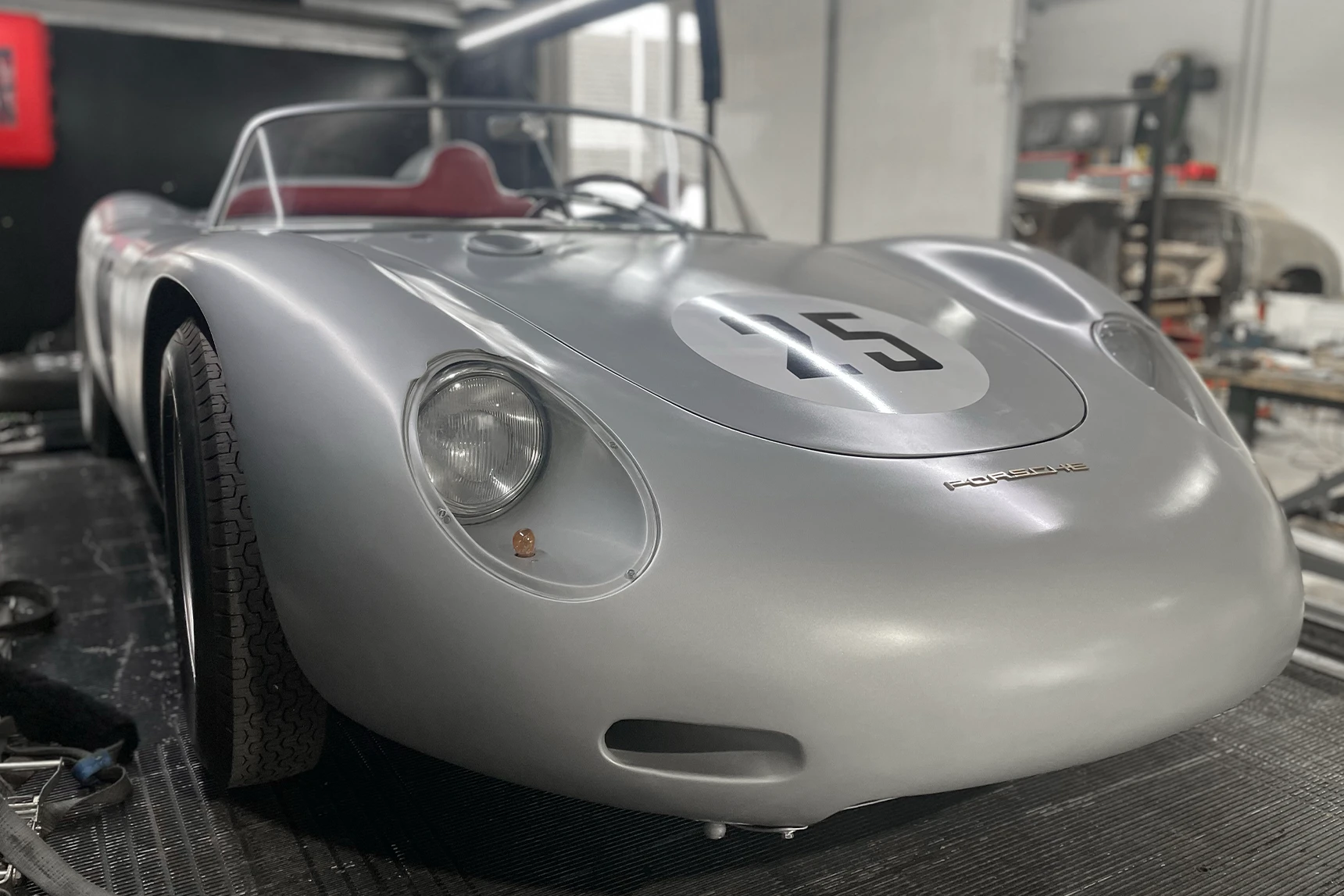
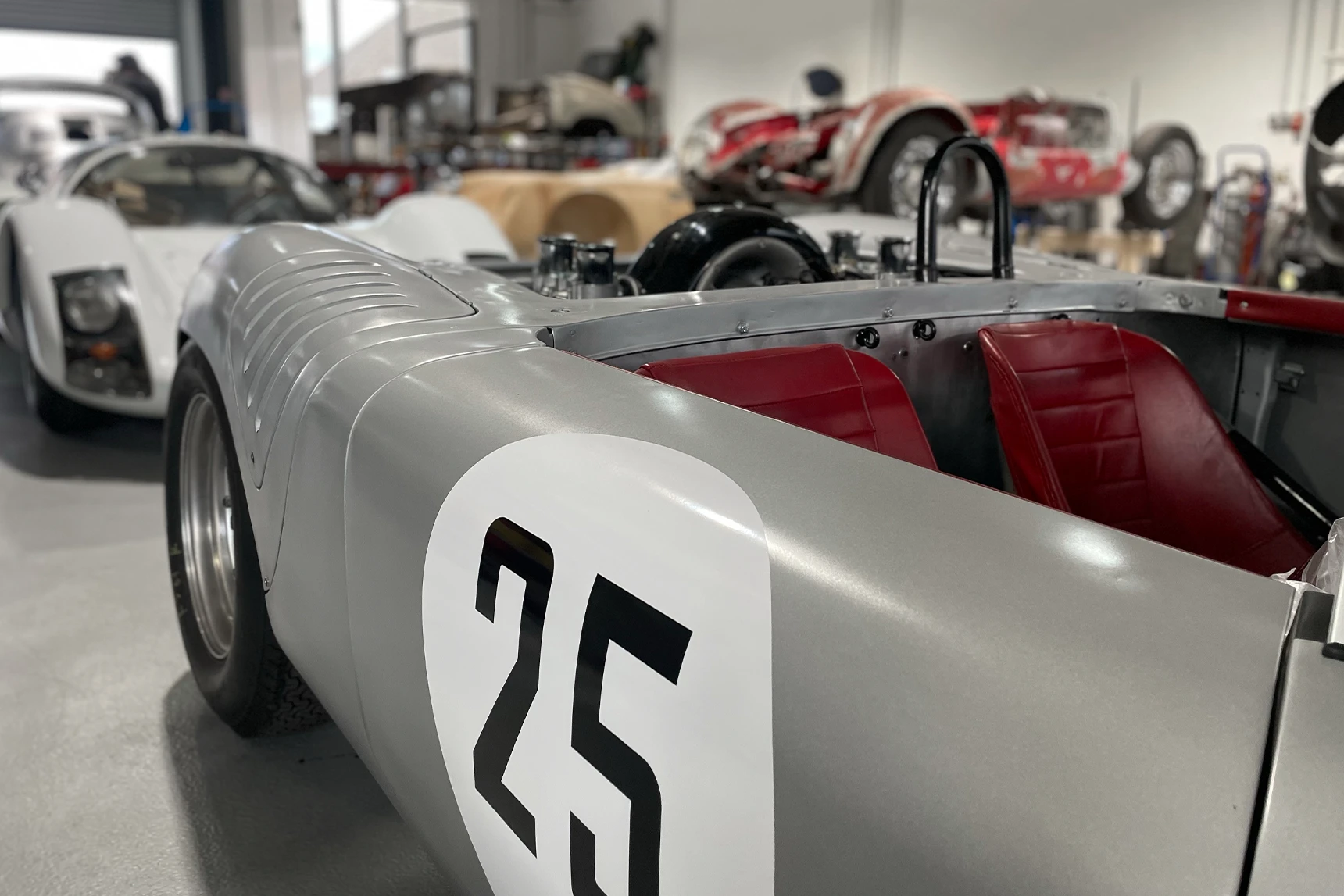

The key objectives of this restoration were the exposure and therefore preservation of existing original material, as well as the return of the vehicle to its authentic motorsport character. Ultimately, the consistent, highly detailed and digital documentation of the entire restoration process represents a new chapter in the history of this one-off vehicle—allowing its value not only to be experienced in motion, but also its recreation to be fully understood and traced by future generations.
Marcel Hapke, Founder & Managing Director