Technology of historic sports cars
Historic sports cars fascinate at first glance with their shape. Lines, proportions, materials and details.
Classics are particularly inspiring when you look under the sheet metal. Engine, transmission, chassis, steering and brake system – we take a closer look!
Technology and its epochs
Historic sports cars are children of their respective era. Their technology tells of courage and imagination for development – of what designers thought possible in their time, what solutions they developed and where they consciously made compromises. A sports car from the 1950s conveys a different driving experience than a vehicle from the late 1960s/70s. Vehicles from the 1980s/90s tell a different technical story.
If you drive several generations, you experience different stages of development in automotive engineering. The vehicles of the big brands were designed for extreme performance and durability.
So classics are not simply an older version of what we know today. No, they were often ahead of their time in design and production. Where modern vehicles are characterized by electronic controls, assistance and regulation systems, the technology of historic sports cars is largely mechanical. Steering, clutch, transmission and chassis require active participation from the driver. In his time, the driver was not only the operator of the technology, but part of the dynamic.

What fascinates me about the technology of historic classics to this day is the reduction to the essentials. Their clarity of design and the lightness of the technical solutions, which stands for maximum efficiency – this is exactly what the Porsche brand embodies. Equally impressive is the filigree technology of Italian origin.
Harald Kutschki, certified master mechanic
Experience technology individually
An extraordinary driving experience is never created by a single component. It is the sum of many precisely coordinated components.
The engine and transmission determine how power is generated and transmitted. The chassis and steering determine how the vehicle reacts to load changes and steering movements. An often underestimated component is the seating position. How a driver sits in the vehicle has a significant influence on his perception and thus also his driving experience. Body size, leg length and individual ergonomics play a role. During a restoration, therefore, not only the historical condition of the seat must be taken into account, but also whether the driver can actually experience the vehicle as it was intended.
A technical restoration can be very individual in line with this requirement.
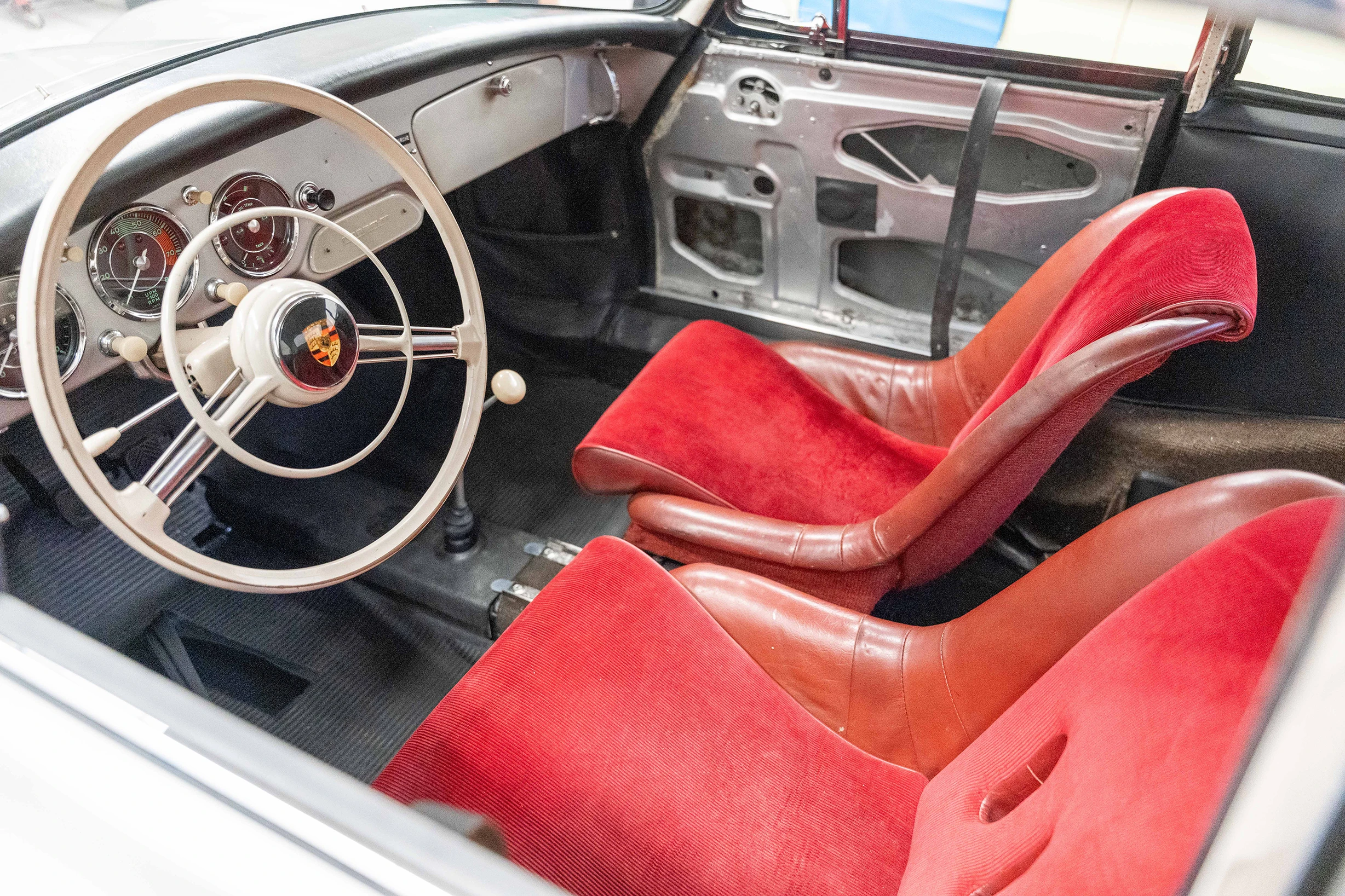
Mechanical precision
Anyone who deals with historic vehicle technology quickly develops a different understanding of the term precision. After all, in a mechanical design, the smallest deviations can have a major impact. Wear, incorrect tolerances, unsuitable materials, imprecise settings or improper repairs can change the interaction of an assembly. A vehicle can sometimes function – but it is far from its original technical condition.
This is precisely why the technically correct cooperation of the respective assemblies and their harmony with each other is decisive for the result.
An engine that runs is not yet a good engine. A gearbox that shifts says nothing about its original precision. And a chassis that works does not have the driving characteristics that once distinguished the vehicle.
Marcel Hapke, founder & managing director
To restore the original is to understand
Technical repairs in particular show how important experience and knowledge of designs and historical production techniques are. Modern vehicles are often repaired by replacing complete assemblies in the event of defects. This is not possible with historic sports cars – and from our point of view of an original restoration it is also wrong, because every detail is an irretrievable cultural asset worth preserving.
Our work begins with questions: What is available? What is original? Why does it no longer work? How can it be preserved? And what purpose should the vehicle serve in the future?
Original drawings, factory specifications, repair documents and historical documentation are part of our archives and form the basis of our work. They help us to accurately reconstruct the original condition of a vehicle. These sources are of central importance for the claim of the original restoration.

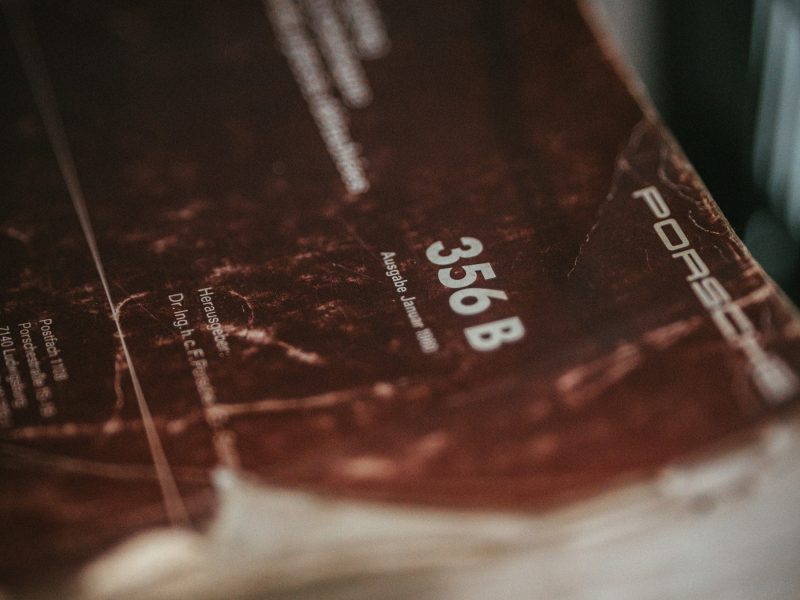
Understanding historical plans and constructions requires a great deal of experience in addition to expertise. Calm and patience are also required in order to be able to grasp the complex relationships holistically. It is not uncommon for a supposedly small problem to be caused by a complex interplay of a wide variety of components. Due to a lack of maintenance and care, improper repairs or wear and tear, we encounter a wide variety of constellations.
Competence, a close look and making the right decisions is, in addition to the willingness to give a vehicle the necessary time, the basis for perfect results.
Marcel Hapke, founder & managing director
Originality is not an end in itself
As a matter of principle, an attempt is made to preserve and/or repair every original component. There are clear limits to safety–relevant components. If a component is defective or the wear limit is exceeded, a responsible solution must be found. Respecting the existing substance, technical connections are preserved and changes are carried out as little as possible. There are no compromises when it comes to safety.
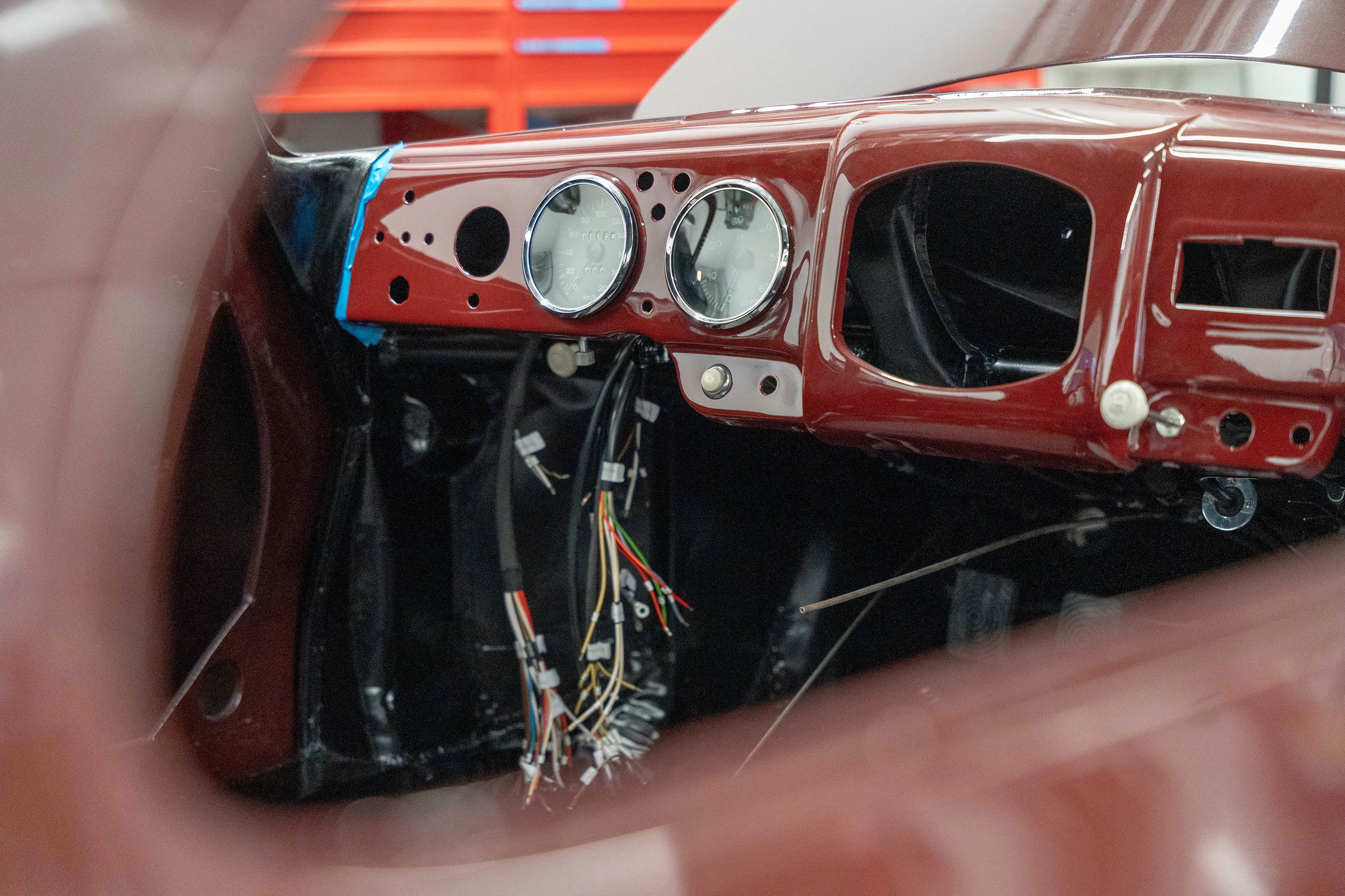
Technology in function = character
Not every detail is immediately visible – but it is precisely the invisible work that often determines quality, durability, authenticity and driving pleasure. The perfect interplay of all elements is what turns a functioning car into a historic sports car – with its own character, depending on the designer.
Documentation for posterity
The detailed examination does not stop with the manual work. At least as valuable for the owners is the project-accompanying documentation of all detailed steps, as well as the subsequent digital availability. A value that the owners of individual exhibits and collection operators appreciate – an investment in certainty and traceability.
DAS BLEIBT.
In upcoming articles, we will go into more detail about individual assemblies:
- Article1: Brakes and chassis
- Article2: Carburettor and engine tuning
- Article3: Peripheral Lever Pedals and Maintenance Care
The technology of historic sports cars is diverse, and its special features often only become apparent in detail.