History in Motion: Hapke in Historic Motorsport
Racetrack Instead of Museum
In Monaco, Le Mans, Goodwood or on the Circuit Paul Ricard in Le Castellet, historically significant sports cars regularly take to the asphalt – not merely as display pieces, but under true competitive conditions. Anyone who campaigns racing icons from Porsche, Ferrari or Ford is not simply looking for a classic restoration of the bodywork: in international historic motorsport, setup, stability, performance and regulatory compliance determine whether history is merely shown – or truly set in motion.
Whether at the Goodwood Revival, the Le Mans Classic, the Monaco Historic Grand Prix or under the Provençal sun in Le Castellet: on only a few weekends each year, these places transform into stages for historic motorsport. Vehicles valued in the millions roll out of transporters arriving from all over the world. Mechanics check the final details of the setup under white paddock tents. Drivers and fans study the circuits. Enthusiasts of historic vehicles meet former Grand Prix drivers, united by a common goal: they all want historic racing cars to do what they were originally built for – driving at the limit.
Accordingly, the cars competing here are neither reproductions nor replicas. They are original sports and racing cars whose history is almost literally engraved into aluminium and steel, into weld seams marked by decades of patina. These cars were not designed for climate-controlled garages or quiet museums, but for running in the midday heat or in pouring rain. They were conceived to endure stress, cover long distances and withstand high speeds under demanding conditions. The owners of these vehicles understand this: they do not merely collect them – they drive them. And they accept that historic motorsport is not an aesthetic parade, but genuine competition and demanding technical work under real conditions.
Tough Demands on Historic Sports Cars
Reliable Performance – Durable and Regulation-Compliant
Anyone competing on stages like these cannot be satisfied with flawless paintwork and visually perfect weld seams alone. Historic racing cars that line up in places like Monaco, Goodwood or Le Mans must deliver more than simply looking good.
If historically significant vehicles are expected to perform under racing conditions, they require precise technical documentation, regulation-compliant and reliable safety solutions, and a structurally sound substance restored in keeping with the period. New safety requirements continually meet engineering concepts from another era. Preserving originality alone is not always enough – it must be balanced with technical reasoning, racing expertise and the respective regulations.
For a vehicle to impress not only in the garage but also on the track, careful setup is essential: setup according to the regulations, the specific circuit, the driver and the subtle individual characteristics of the car itself. Suspensions must withstand numerous intense load changes, and reconstructed weld seams must not only appear convincing at first glance but must provide genuine structural integrity.
All of this requires solid hands-on experience – because race readiness is not a coincidental side effect of a historically correct restoration. It is a benchmark in its own right.
From the Workbench to the Starting Grid:
Hapke in International Historic Motorsport
Often only a few months lie between the workbench and the starting grid – sometimes only a few weeks, or even days. Yet our actual work often begins long before that: in analysis, in conversations with owners and drivers, and in the careful balancing of preserving historical originality while ensuring reliable race readiness. In analysing regulations, identifying individual structural weaknesses and evaluating countless technical details. We are always proud to play a part in this new chapter of historic motorsport history.
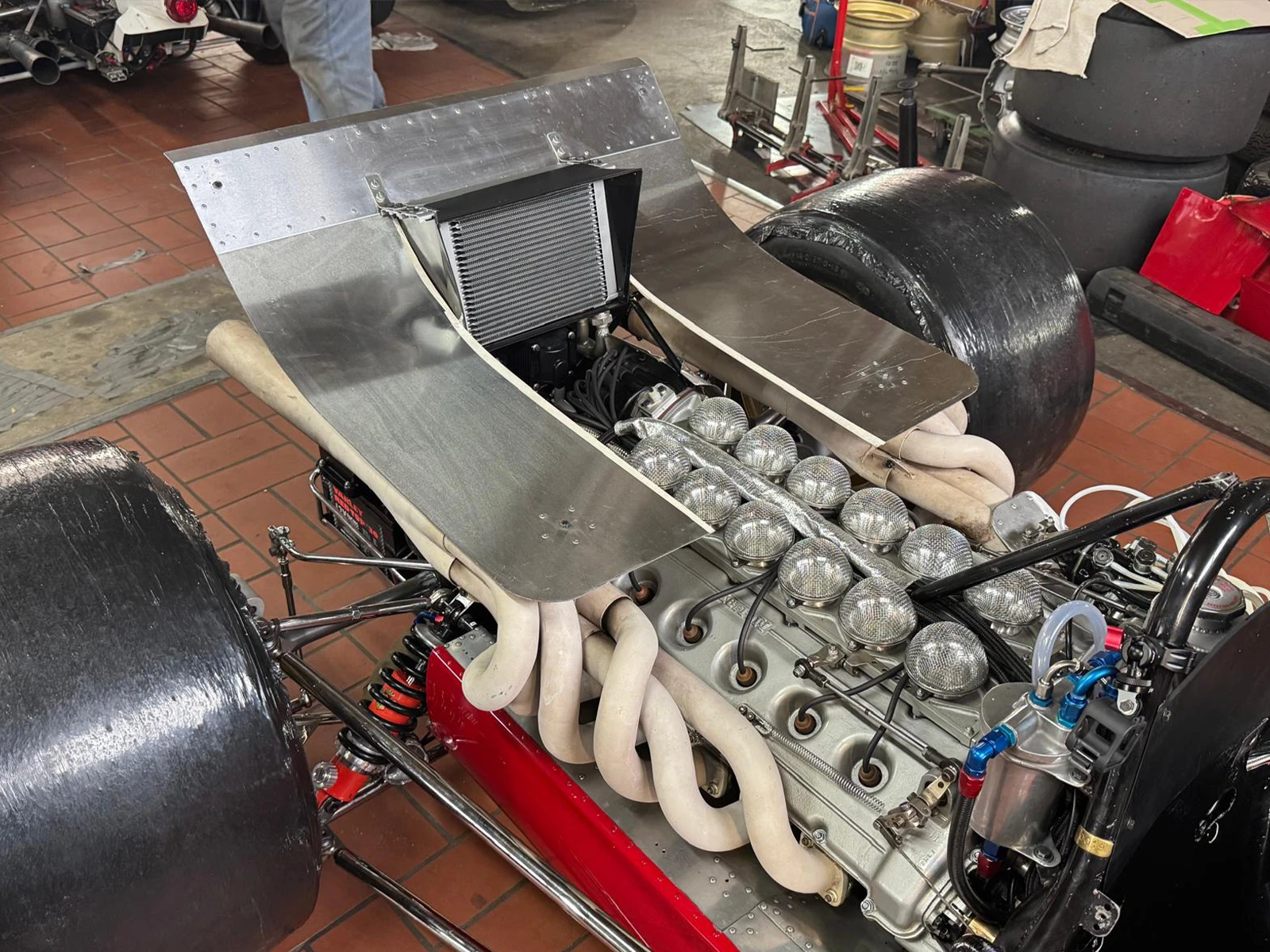
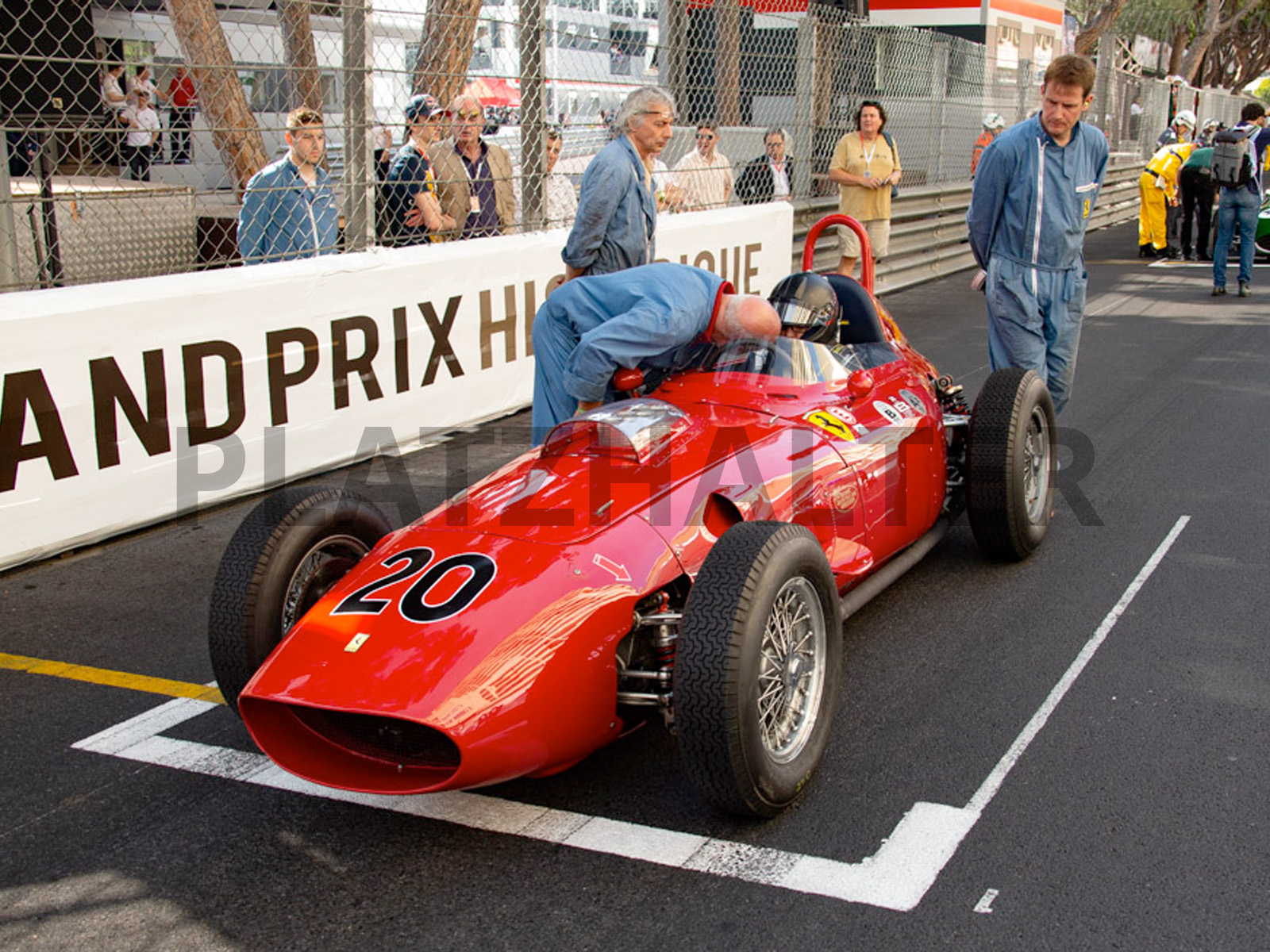
New safety regulations introduced for the 2022 Monaco Historic Grand Prix required vehicle-specific solutions for participants. For two clients, detailed solutions were developed and integrated into the cars.
Both the Ferrari Dino F1 and the Maserati 300S were therefore able to compete successfully in the Grand Prix under the new regulations – and in the case of the Ferrari even achieved a top-three finish.
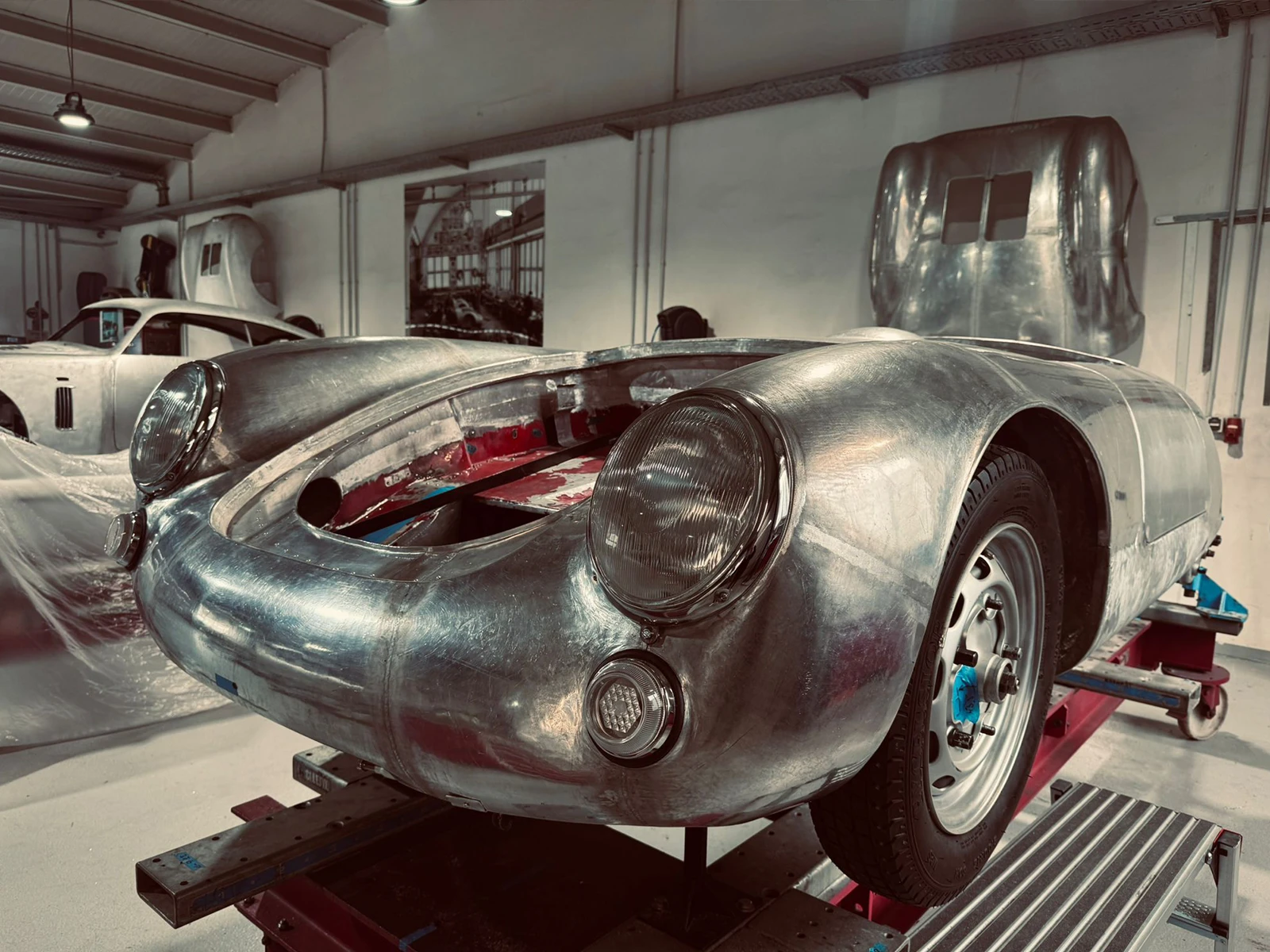
At the same time, two early Porsche 550 Spyders are currently undergoing restoration in our workshop. These are vehicles with a rich racing history whose aluminium bodywork requires particularly sensitive and highly skilled craftsmanship. The aim is to preserve the historic substance, stabilise heavily stressed structures and prepare the engine and chassis setup so that future entries in international historic motorsport are not only possible, but competitive within their class.
Race Readiness as the Benchmark – Model History as Cultural Heritage
A classic restoration of historically significant sports cars can lead to visual perfection. However, when the goal is also the chequered flag, these vehicles must deliver far more: engines must run reliably under continuous load, cooling systems must dissipate heat dependably even at high temperatures, and suspensions must withstand intense load changes caused by high cornering speeds and heavy braking manoeuvres.
Weld seams on aluminium bodywork must not only remain as witnesses of time but must also be evaluated as structural elements and, where necessary, professionally stabilised in a historically correct manner.
Race readiness means reliability at the limit.
It does not arise by chance or goodwill alone – but through precise preparation by experienced automotive enthusiasts who keep the intended purpose firmly in mind.
Yet these vehicles are more than mere sporting equipment, more than racing machines. They are cultural heritage, prestige and investment objects, and irreplaceable witnesses to a very special era in motorsport history. This aspect of a vehicle’s DNA must never be forgotten.
Our ambition is therefore to restore historic sports cars in such a way that they can withstand demanding conditions and remain technically robust, while at the same time visually reflecting the spirit and the materials of their original era with authenticity. This requires respect for materials, construction methods and historic craftsmanship – but also an understanding of the spirit of sporting competition that once brought these vehicles onto the roads and has made them famous to this day.